



So. It’s just after the holidays, and a whole slew of people opened a new Amazon Echo or Google Home brought by a jolly elf as a gift. Now, they are rolling their eyes or scratching their foreheads over the responses they get from their supposedly smart home assistants, or (if they are like one of my office colleagues) they are claiming the thing is trash, but perhaps better, they are praising the heavens and enjoying the heck out of artificial intelligence and Voice-User-Interface. Hallelujah for converts!
Many along any point on that spectrum are wondering how the heck it could be so difficult to get that stuff right, and many of you, dear readers, are wondering what this has to do with the price of peas and technical writing.
Allow me.
 You see, a few weeks ago, my development team here at my office had what we all an “innovation sprint.” That is where we get to blow off some steam and quit working on our traditional run of the mill development tasks and think, instead, about the kinds of things we would do if we didn’t have customer deadlines and goals. We get to open up our imaginations and play around a bit – so what we did was to imagine what would happen if we could get something like the Amazon Echo to talk to mainframe computers and therefore get mainframe computers to talk back to the Amazon Echo – the ultimate in automation processes, as it were. Now mind you, the entire team does not have to participate. This process is totally voluntary. Team members can catch up on overdue work or sketch out other projects that they may want to work on in the future. They can conceive of ways to make their workdays easier or to otherwise improve the customer experience, that sort of thing.
But I was sticking with the Echo. I did not think it would work, but I am a glutton for impossible tasks.
I was right, and we failed fast. Too many security issues, turns out. But what did work, and what tickled me to no end, was that it IS possible to ask the adorable Voice User Interface to search my well-crafted user documentation (a tome that would be some 6,000 pages if it were printed, mind you) for any string of words or numbers that you wish to find, and the marvelous Alexa can be taught to return results with alarming accuracy. Voila!
Just like Alexa can learn movie trivia or what time the bus will arrive at my stop, just like this model of artificial intelligence can archive my weekly grocery list and take on my daily calendar or read each day’s news from a variety of prescribed sources, this cylindrical wonder will root through those words upon words upon numbers and more words, and even acronyms and reveal the right answer time after time. Once we program her.
Eureka!
In addition to these innovation sprints, my company also supports a project called the Accelerator. Think “incubator” but with less risk. A gargantuan company helping to nurture fledgling startups. It’s pretty great. First there is a rigorous application process and proving ground, naturally, but once you’ve run the gauntlet, it’s quite the ride – a supported startup, if you will. And that is where I am headed, my Alexa by my side.
A technical writer’s dream, and maybe nightmare, all at once.
It seems I have opened an oyster of sorts.
I found a path to documentation using VUIs, a search tool for the largest documentation set with which I have worked. And after all, the Alexa was named after the Library at Alexandria, so it stands to reason. I am pleased as punch. Let the innovation continue, and the documentation shall “speak” for itself.





 I looked on Wikipedia, and the generalist definition of Information Engineering is that we take a software engineering approach to writing and developing information systems, or that mostly we are computer geeks who write. Well…I’m actually a writer who enjoys software systems. I was hired to work specifically on mainframe systems even though I knew almost nothing about mainframes when I joined the company. I think the big distinction is that, as writers, we know how to communicate complex information and that we have knack for learning things. Definitely if I was not into learning, I would stink at this job. But what actually separates me from a “media strategist” in terms of my skillset? That is to say, what if I wanted to leapfrog from my current job into media strategy? Am I working on the tools that might be portable enough to move from one position to another? Yes. And you should too.
 ssary and move on if not. From an installation guide to a set of scenarios for implementation to third-party software agreements, it all has to be chunked into usable bits of information in the best way(s) possible, and it is up to us – the wordsmiths, the video script writers, the graphic designers, and the UX specialists, to get it right. And often, more and more and more often – we are the same person.
 pursuing a certification in Content Strategy. Yes, content. I rather enjoy thinking of my writing as “content.” While I agree that there may be more nuanced terms for some forms of writing – and we may be more specific: poetry, haiku, essay, short story, etc., in the world of technical communication, marketing and corporate communications, what we create is…wait for it…content. But I was more bent out of shape because when asked, I introduce myself as a writer. I rarely qualify this term unless I need to.
 People consume my content, not the way they consume a classic novel or even a beach read. They do not recommend my work to their friends as the next great thing to read, and they do not say, “Hey, did you see that great process that Susan just created? Wow! Talk about incredibly lean doc!” That, my friends, is the dream of any software documentation writer, I assure you. But maybe, just maybe, what some of my friends say is, “Susan wrote an insightful blog about the value of Content Writing and how it is important, just like writing your memoir. After all, that technical document will show you how to set up your new laptop so that you can write your memoir. And then you can stick your nose in the air and claim that is real writing, not merely content.”
 development at all. I miss them because they were rather fantastic social networking events where I got to visit nifty cities and see old friends, meet new friends and make some cool connections that would become Facebook pals I’d never see again anywhere other than social media. I’d occasionally hear a good lecture, but more often than not I would gain little professionally and more socially from those conferences. Even the ones where I was a presenter. Don’t get me wrong – there is assuredly professional gain. It is a boon to my resume that I gave a talk at The
  Digital is the new real, and though those professional conferences sure are delightful if they are in Vegas or New Orleans or New York, I’d rather get my work done from my Pittsburgh home office and go out to celebrate after the amazing writing hits the screen – like it just did!
 ding and loyalty is perhaps what is at the very epicenter of good internal messaging. When a company is trying out a new path, forging new avenues into new markets, a straightforward, clear internal communications plan is essential. Knowing
 perceived to be a non-transparent business communication system, and a poor employee motivational approach. While it is not strictly a communication practice and is more closely related to HR, the rollout in Yahoo’s case was greeted with a great deal of pushback on Yahoo’s own communication message boards. It was met with deafening silence from Yahoo’s CEO, Melissa Mayer. The response is the internal communication failure. The non-collaborative practice practically urges people to stop working together. When expectations are unclear and competition is the goal, people almost always underperform.
 ese days, trust is hard to keep. It is easy for a slide deck to appear in New York, and for those employees to tweet the content of that deck to their colleagues in LA to let the cat out of the bag before the presentation is even complete. We must be trustworthy in all our messaging. This means that those of us who are preparing internal messaging must be certain that we are on point long before the cow leaves
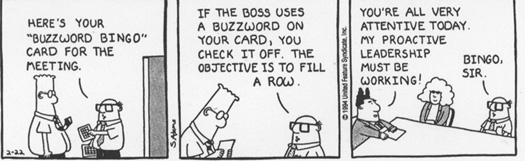
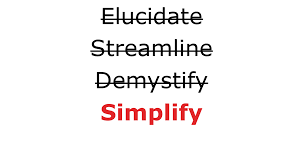 Clear and consistent jargon-free messaging has to become part of the company culture. If we can’t get past all of the marketing pizzazz, which is necessary, and the emotional protection, which is also necessary, then we weaken the relationship that we strive to build.
 Women who are encouraged to be leaders have to internalize that role and believe that they can be that role. Leadership is an identity, not just a title. Part of what stymies women in escalating toward these roles is the “human tendency to gravitate to people like oneself,” in which case women are lacking in examples of other powerful women (Ibarra, 2013).
 which then assumes the “trailing spouse” (wife) who can pack up and move along with the new job offer. A wife who has no career can easily pack up with the kids and relocate with little trouble to follow the new promotion opportunity. This work-value is much more difficult if the “trailing spouse” is a man with a career trajectory similar to that of his wife.
 In Agile Software Development,
 developing software, but in the embracing of documentation as part of that software, but instead it is often “kicked to the curb” by many teams as a misinterpretation of that one element of the original manifesto.





 Have a Pint at the Tech Pub